
Manual Incision Cataract Surgery (MSIC) in Myanmar - Part 1

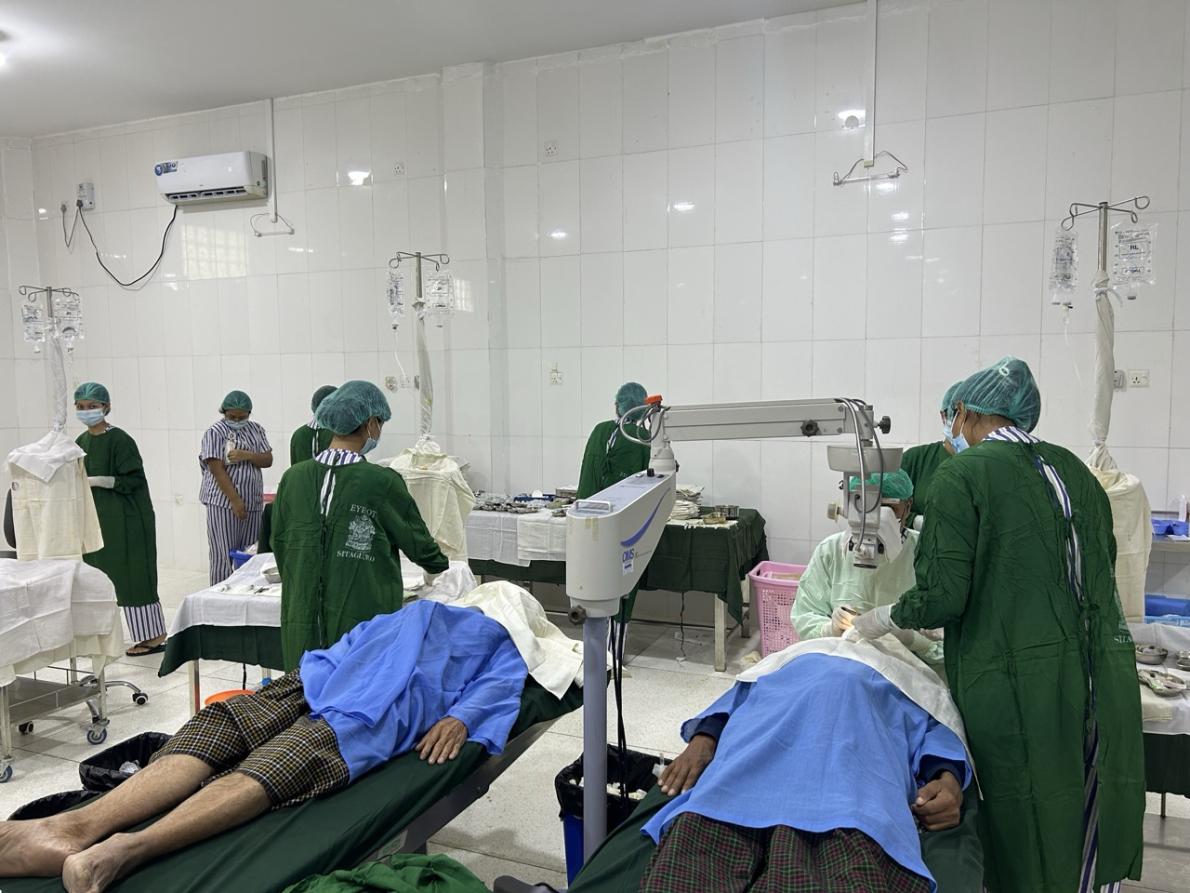
One of the core experiences of the global ophthalmology fellowship is learning manual small incision cataract surgery (MSICs), a cost-effective and efficient method of doing cataract surgery in resource-limited countries. This year, I spent the most incredible 2 weeks learning and performing MSICs in Myanmar under the mentorship of Nepalese surgeon Dr. Bidya Pant, one of the highest volume yet low-profiled cataract surgeons in the world. Dr. Pant has devoted his life to helping to cure blindness in different parts of the world, and witnessing his work was an unforgettable experience.
I spent my 2 weeks living at Sitagu Buddhist Monastery located in Keytumati, a small town in central Myanmar. The monastery has an on-site eye hospital, supported by generous donations from various NGOs, where patients from near and far come to receive free eye care and surgery.
Day 1
My day starts at 7:00am where we walk to the hospital canteen for breakfast— today’s breakfast includes black-eyed peas, vegetable samosas, dried salted fish, tomato chutney, and tea. After breakfast, we head to the clinic to see pre-op patients. Hundreds of patients are sitting on chairs and overflowing on the floors, waiting to be examined for pre-op. Remarkably, we get through all these patients in a mere 30 minutes. This is accomplished by a factory-line-like orchestration where an army of ophthalmic nurses help to guide each patient.
After clinic, we head to the operating theatre and start surgeries by 8:30am. Since it’s my first day here, I’m mostly watching Dr. Bidya operate. Aside from watching Dr. Bidya’s incredible sub 3 minute cataract surgery, I am in awe of the efficient system in place. Dr. Bidya has two operating tables such that as soon as he finishes a 3 minute cataract surgery, he swings his microscope over, changes gloves, and begins the next one in about 10 seconds. The operating theatre is staffed by extremely well-trained ophthalmic nurses who each have specific jobs: one for walking the patient over to the operating table, one who handwrites the “op note,” and checks the intraocular lens, one scrub technician, another circulating technician, one who is prepping supplies for the next table, and many more…it’s an amazingly efficient operation.
Day 2
Every morning, I go for a walk around the monastery. This is my time to potentially call family and friends, depending on the cellular service’s cooperation, which varies from not working to very slow. As I walk, the air is filled with the sound of monks chanting their morning prayers. It’s very peaceful. In the hospital courtyard, patients move about—walking slowly, gathering in small groups, napping on the ground, or lining up for their appointments. Many of them have traveled from distant rural villages and stay here for several nights, where accommodation and food are provided to them free of charge.
Day two was my first full day in surgery, and it was tough. MSICS is something we rarely perform in the U.S., so the learning curve is steep and demanding. Thankfully, Dr. Bidya is incredibly patient and creates a safe space for learning—I feel so fortunate to work with him. I’m also grateful for my amazing scrub tech, Chachi, who seemed to know exactly which instruments to place in my hand and offered nudges of encouragement throughout the day.
Day 3
After a long day in clinic and surgery, I go for a sunset walk around the monastery. The days are short here, with the sun setting around 5 p.m., so this becomes my time to be outside and decompress. Life moves at a different pace without Wi-Fi, cellular service, or social media, so walking the grounds of a Buddhist monastery turns into a deeply meditative ritual. Afterwards, I walk to Dr. Bidya’s apartment, where we cook together and enjoy chapattis, vegetable curry stew, and tea.