
Transplants, Traditions, and One Unforgettable Week in Skopje, North Macedonia

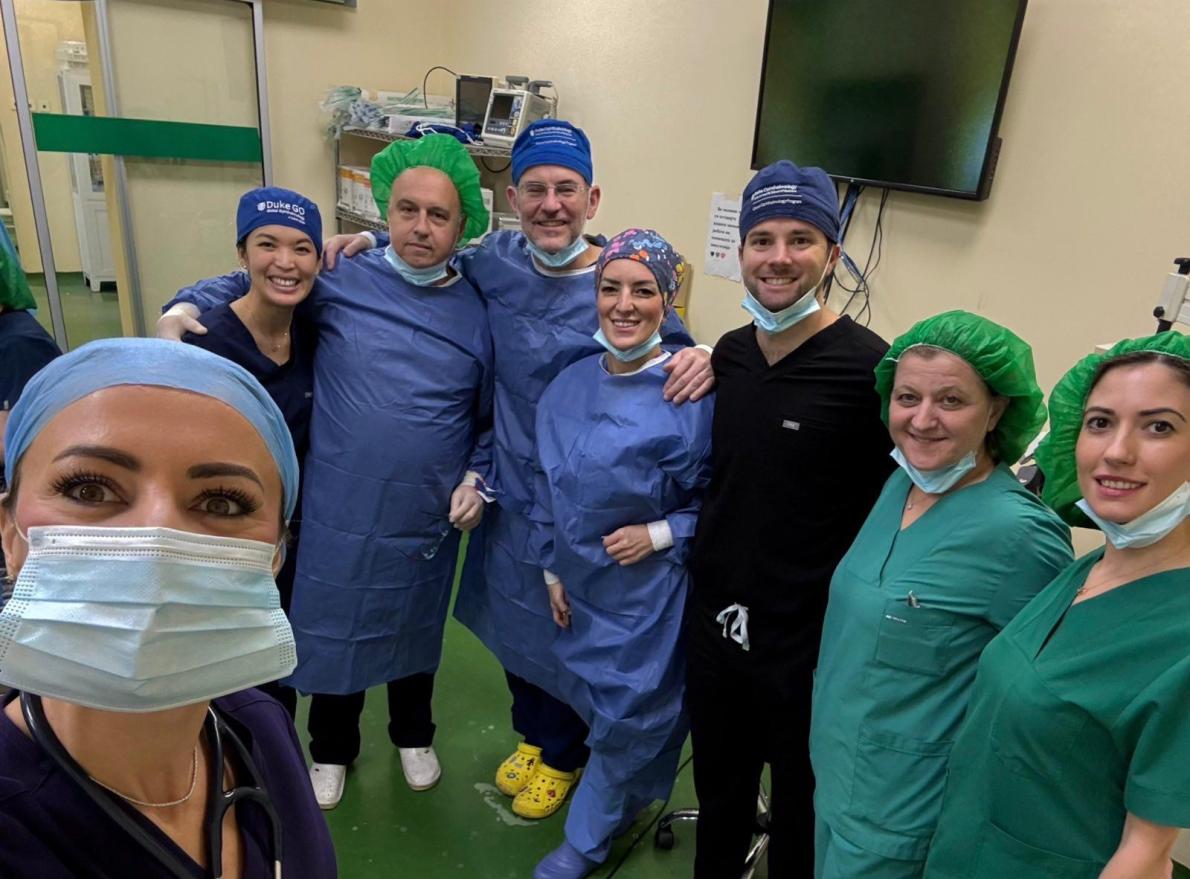
This week I had the privilege of traveling to Skopje, North Macedonia with Dr. Lloyd Williams and Dr. Nickolas Garson to collaborate with local ophthalmologists on corneal transplantation. We brought with us seven donor corneas and completed nine transplants over the course of a week:
Day 1: We evaluated previously screened patients whom the local ophthalmologists had identified as potential candidates for corneal transplants. This process involves determining what kind of transplant- if any- each patients need, creating a rank list of recipients, and then matching each donor tissue to the appropriate patients. In some cases, a full-thickness penetrating graft can be divided into anterior and posterior lamellar tissues, allowing a single donor cornea to potentially benefit two patients. In many ways, it feels like a game of Tetris— fitting the piece together to benefit as many patients possible.
Day 2: We performed two DMEKs— the first ever performed in North Macedonia— and one penetrating keratoplasty, the first performed in about 40 years. Dr. Williams completed the inaugural DMEK, with Dr. Hristian Duma assisting, and the second DMEK was performed by Dr. Duma himself, which was incredibly exciting to witness. That night, the Macedonians treated us to a generous dinner in a lively underground restaurant where we toasted to these milestone transplants and enjoyed what was arguably the best lamb meal of our lives.
Day 3/4: Over the next few days, the team performed additional penetrating keratoplasties and patch grafts, with increasing surgical progression each day. By the end of the trip, Dr. Duma and Dr. Ana Trpeska were independently performing all of the transplants— always the highlight of these trips for me. We also saw our daily post-op patients together, reviewing both immediate and long-term management plants with the local team.
Day 5: Surprisingly, some of the biggest barriers to implementing corneal transplants are the legislative and regulatory gaps. With the support of Drs. Biljana Kuzmanovska and Natasha Trpevska, two trailblazing and extremely hardworking doctors, we were able to make this collaboration a reality. Perhaps one of the more unexpected highlights was meeting the Prime Minister of North Macedonia, Hristijan Mickoski, where we discussed the future of corneal transplants in the country and advocated for stronger legislative support for these procedures. For such a small country, the North Macedonians pack a big punch and I’m excited to follow the progress in ophthalmic innovation I know they will achieve!
After fulls days of surgery and clinic, our hosts also showed us their beautiful city— taking us to the Old Bazaar, Macedonia square, and Vodno mountain, amongst other places. Every evening, we shared long meals and drinks together, and I began to understand how deeply relationships shape global ophthalmology.
The surgical and clinical knowledge I gained was valuable, but it was overshadowed by lessons in virtue and what really matters in life. As Dr. Duma kept exclaiming the entire trip, “You only have one life!”
-
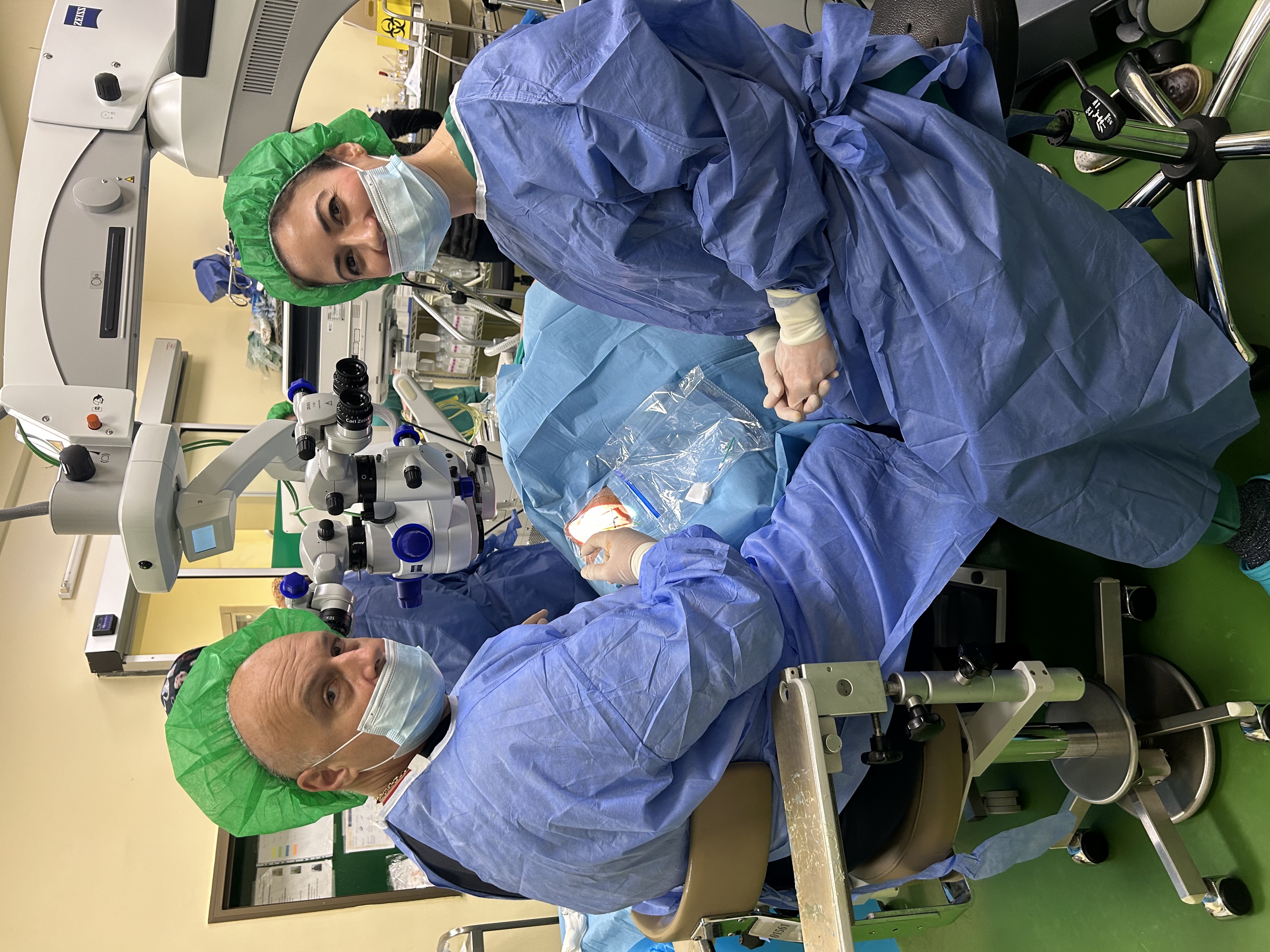 Dr. Hristian Duma, University Eye Clinic’s director of ophthalmology, and Dr. Ana Trpeska, performing a penetrating keratoplasty together.
 -
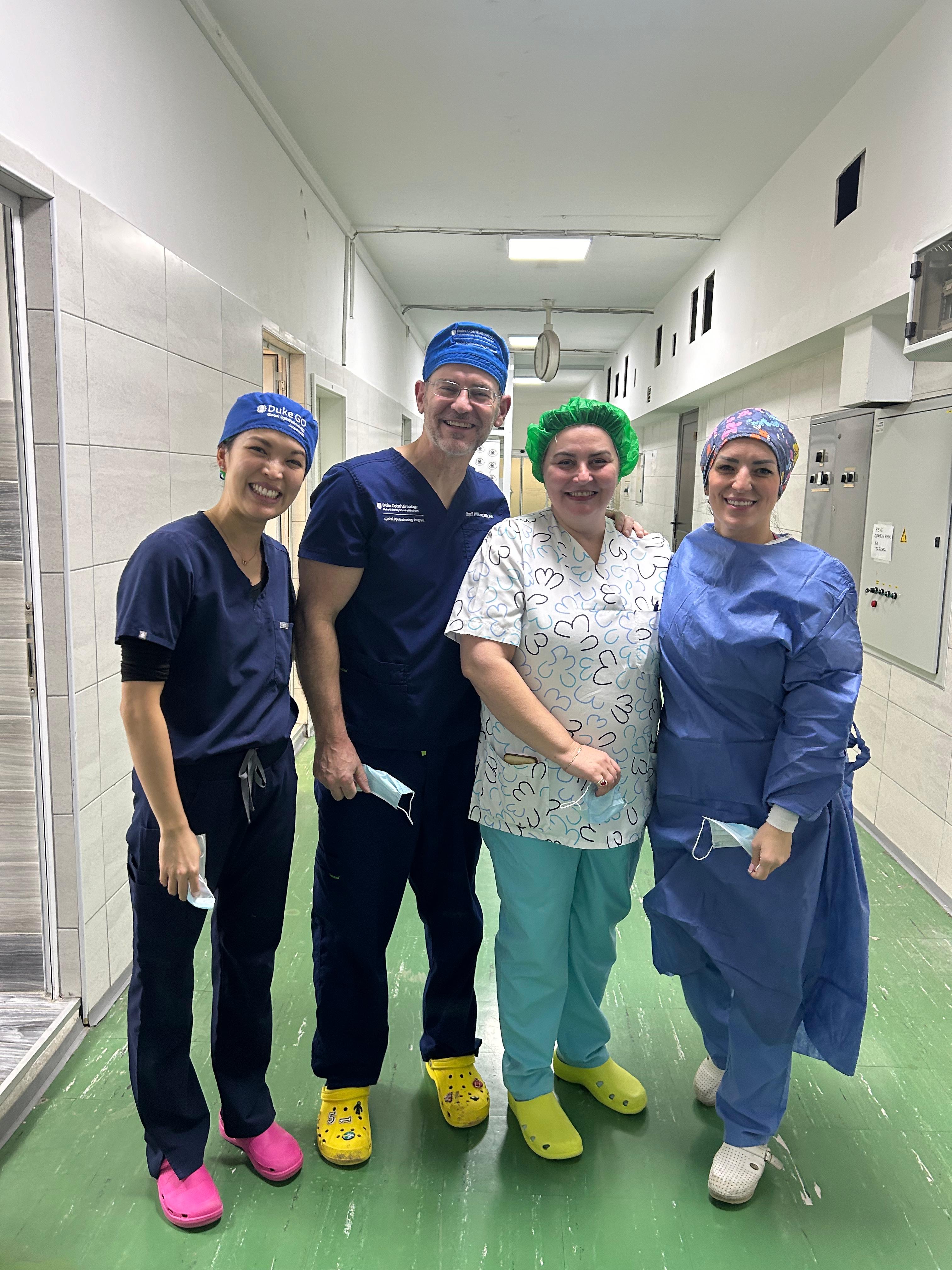 Smiles with Drs. Biljana Kuzmanovska and Natasha Trpevska, whose behind-thescenes efforts made this corneal transplant collaboration possible.
-
 Meeting with North Macedonia’s Prime Minister Hristijan Mickoski and Minister of Health Amir Aliu to discuss current and future collaborations in corneal transplants.
 -
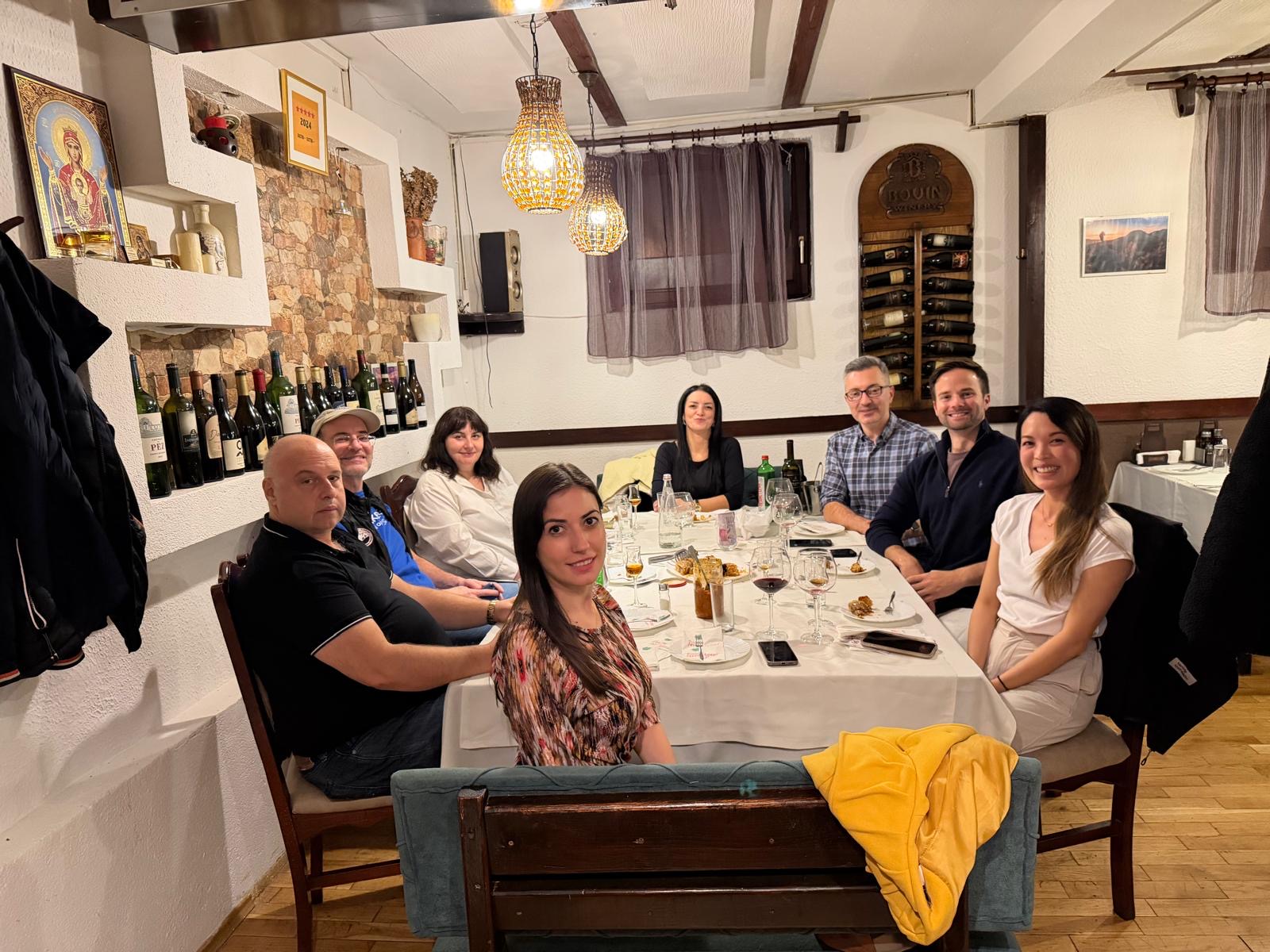 Celebrating a successful day of corneal transplant surgery with toasts, an incredible lamb feast, and cherished time around the dinner table.
 -
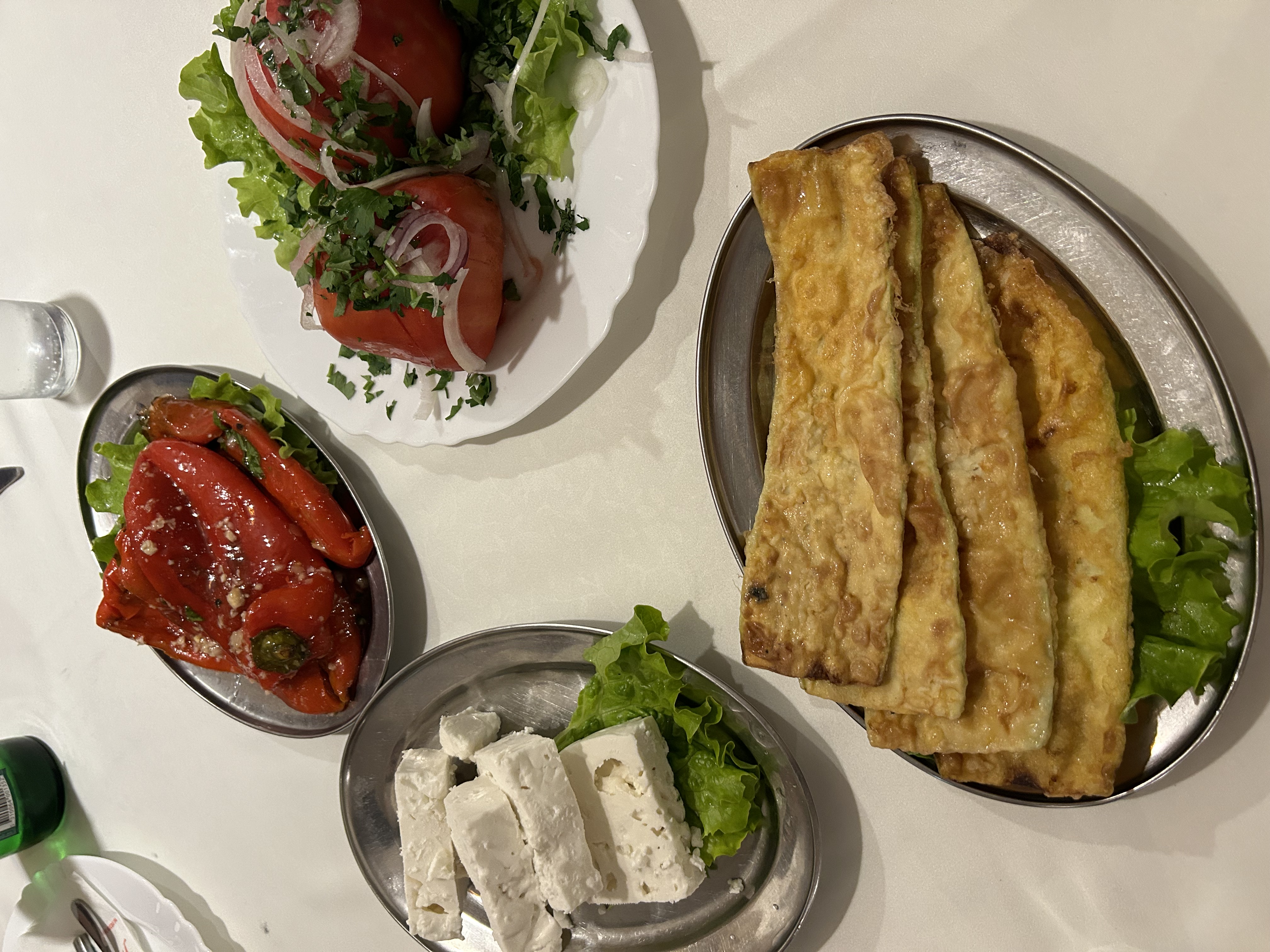 Some core staples of North Macedonian cuisine including roasted red peppers, eggplants, tomatoes, and white cheese.