Witnessing Miracles in South Sudan
Of all the destinations during my global ophthalmology year, none has stayed with me more deeply than South Sudan.
South Sudan has a turbulent history. Marked by decades of civil war, South Sudan gained its independence in 2011 and is the world’s youngest country. Even recent history is marked by political conflict, religious conflict, and land disputes. When I was initially presented with the option of going to South Sudan for a CureBlindness cataract camp, my reaction was a mix of excitement and fear. Dr. Lloyd Williams has been going to South Sudan for several years now, but as a young female ophthalmologist, I was nervous. Nevertheless, when there is such an enormous burden of blindness, the chance to help care for patients felt like an opportunity I could not ignore. As Dr. William’s fellow, I had seen countless photos and videos of his journeys to South Sudan, and to experience it in person, I knew would be the experience of a lifetime.
Arriving in Juba, the capital of South Sudan, I looked outside my plane window to find an arrival terminal which consisted of a single airstrip and a single room. The room is bare, with peeling paint on the walls and a large industrial fan to keep the sweltering heat to a minimum. While we wait for our ride pick up, I notice a steady stream of white jeeps with logos of international aid organizations-- Red Cross, Doctors without Borders, and the United Nations. I assume that any other foreigner here is an aid-worker like me.
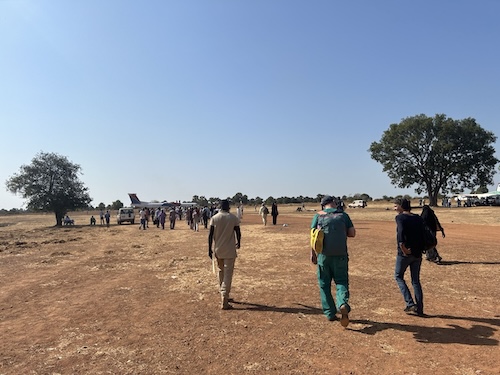
The following morning we board a smaller plane to Aweil, South Sudan. The flight feels like a bus, with no assigned seats and everyone makes a dash across the tarmac to ensure a seat. I chat with the guy sitting next to me, who I learned escaped to Nebraska during the civil war, and is returning to visit family. As the plane descends, I say a little prayer, and am pleased to find that the plane has a smoother landing than our large commercial flight out of the US! There is no runway outside the window, and we step out of the plane onto a dirt field.
We are taken to our modest hotel. Despite paying for international service, there is no carrier service here, so my only wifi usage is limited to the morning and evenings when I lounge near the lobby’s router. My room consists of the essentials: a bed with a foam mattress, a thin sheet covering it, and a single pillow. There is a fan that intermittently works, and a small wooden table and chair. There is cold running water in my bathroom, which I welcome due to the heat. I spot several cockroaches and critters in my room and mostly try to ignore them.
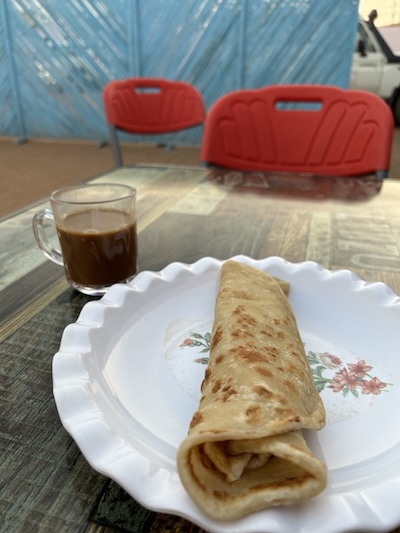
Every morning we are served “rolex,” which I find later is the local pronunciation of “rolled eggs,” a fried egg wrapped in a paratha-like wrap, and some instant coffee. This is the most reliable meal of the day and I savor every bite.
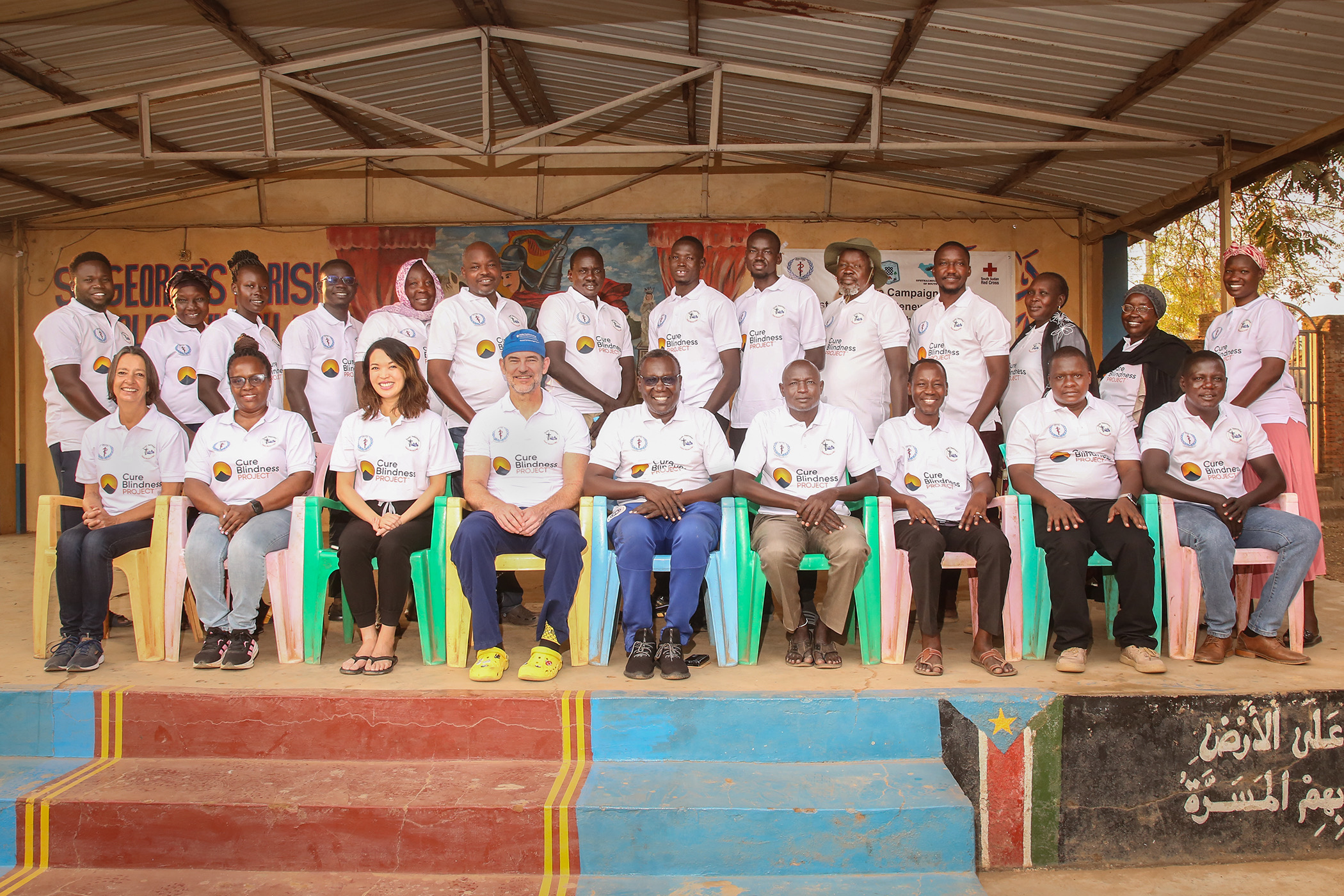
We head to the camp in the morning, in which hundreds of patients and their accompanying family members are gathered in the courtyard of a church. An army of staff including the South Sudanese ophthalmologists, nurses, ancillary staff, and Red cross volunteers, are checking vision, dilating patients, performing quick penlight exams, and guiding patients from one station to the next. Some patients are pre-op, some are post-op, and several more are waiting to be triaged. It’s a chaotic scene, but on second glance it’s really quite beautiful because this is one of the most efficient mass camps I’ve ever seen.
After seeing patients in the morning, we head to the OR. A weathered “no guns sign” appears at the entrance of the building—a stark reminder that we were working in a placed shaped by conflict. The building is old and worn. I walk through the lines of patients waiting for their turn for surgery, each one with a piece of tape on their forehead, indicating their surgical eye. Many of them are bilaterally blind and have their walking sticks at their feet—I am careful not to trip on their sticks.
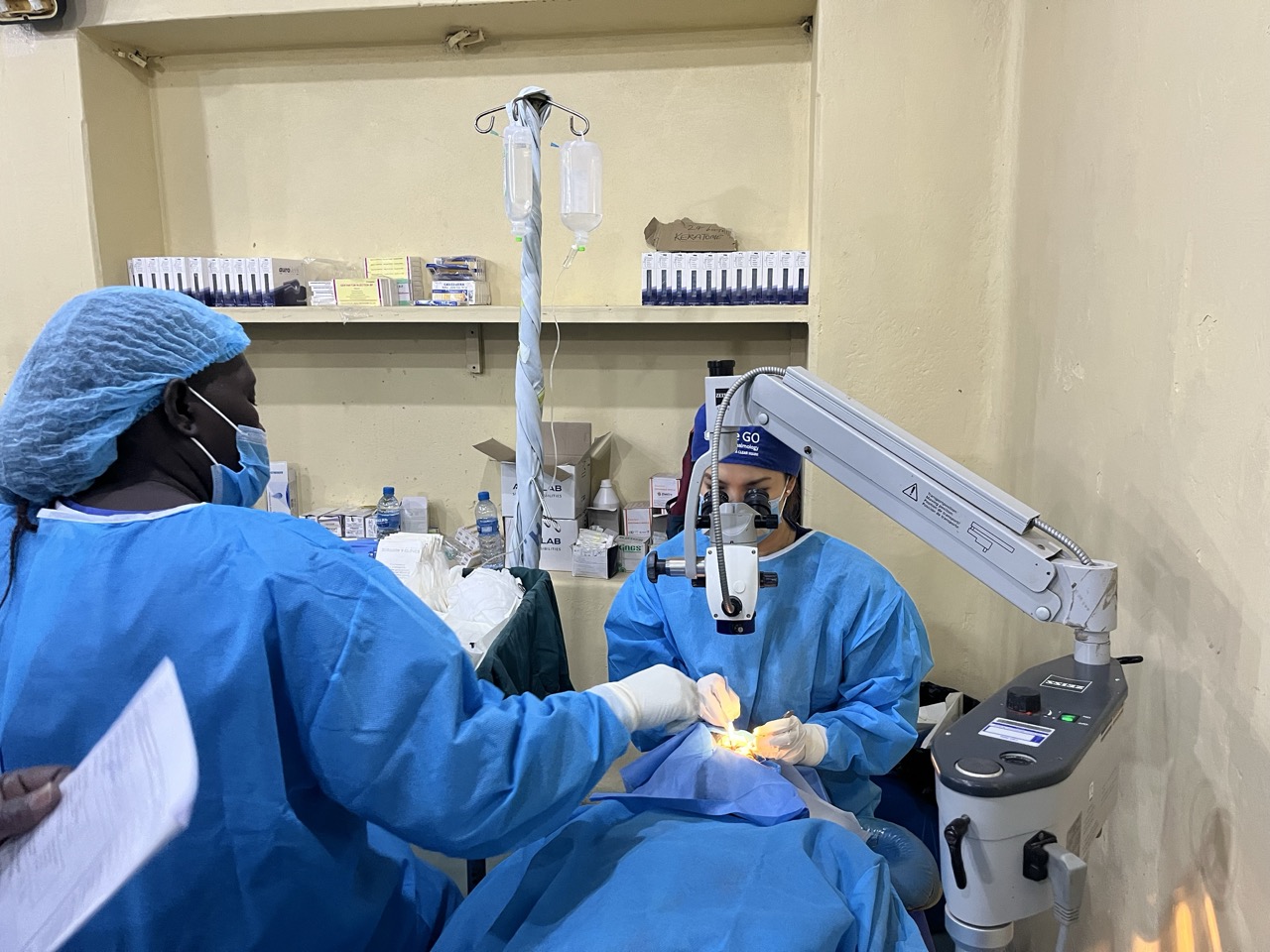
The OR is a converted room, about the size of a two-car garage. There are 3 tables, 3 microscopes, 3 scrub technicians, and 3 surgeons fast at work, performing manual small incision cataract surgery with astonishing speed. The surgeons consist of South Sudanese ophthalmologists and a nurse cataract surgeon: a surgeon with no medical doctor degree who has been specifically trained to perform cataract surgery in response to the country’s overwhelming need and severe shortage of ophthalmologists. I realize that this outreach camp has brought together 4 out of the 6 surgical ophthalmologists in the entire country—what a crazy thought! South Sudan has 0.4 ophthalmologists per million people, sharply contrasting with the U.S, that for example has 80 ophthalmologists per million people.
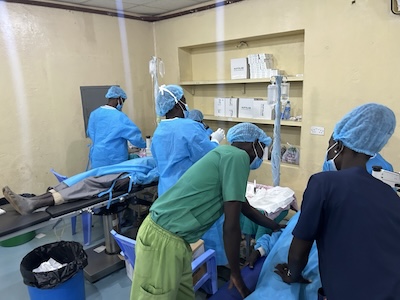
The O.R. flow proceeds efficiently. Approximately every 5 minutes, I hear a “PATIENT OUT,” and a nurse quickly escorts a patient off the table, while another nurse lies down the next patient. Each surgeon is taking 6-10 minutes to complete the cases, and starting the next case about 4 minutes later. Over the next 10 days, the team performs over 1000 cataract surgeries. There is no wasted minute, and I watch the process with awe.
Over the next few days, I had the opportunity to perform a few MSICs cases myself. The cases are hard, and I’m seeing the some of the densest cataracts I’ve ever seen in my life, the result of chronic untreated cataracts compounded by malnutrition and the hardships of daily life. Each surgery is humbling. Some cases unfolded smoothly, bringing immense satisfaction, while others test every ounce of skill and patience, reminding me of just how much I still must learn.
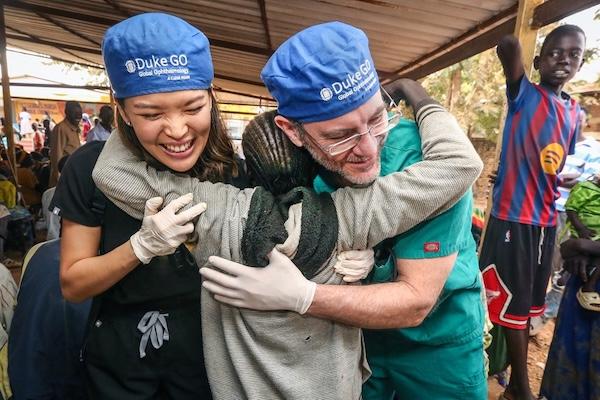
Every morning during post operative day 1, I witnessed what felt like miracle after miracle. About 150 patients from the previous day are lined up on benches in the courtyard waiting for their eye patches to come off. I grab a flashlight and proceed to start taking off eye patches. Words can’t describe that first look feeling as one removes an eye patch. Some patients sat stunned in silence and disbelief, blinking as they slowly realized they could see again. The second reaction I encounter was pure joy accompanied by dancing, laughter, and ululating shouts of happiness. People often say that the eyes are the window to the soul and in those moments, I believed it. As I looked into the newly seeing eyes, I saw gratitude, dignity, wonder, and above all, hope.
Going to South Sudan was without a doubt one of the most impactful and meaningful experiences of my fellowship year. I’m so glad I made the decision to go to South Sudan and was reminded that when faced with decisions of uncertainty, to choose the path of most meaning and least regret.