
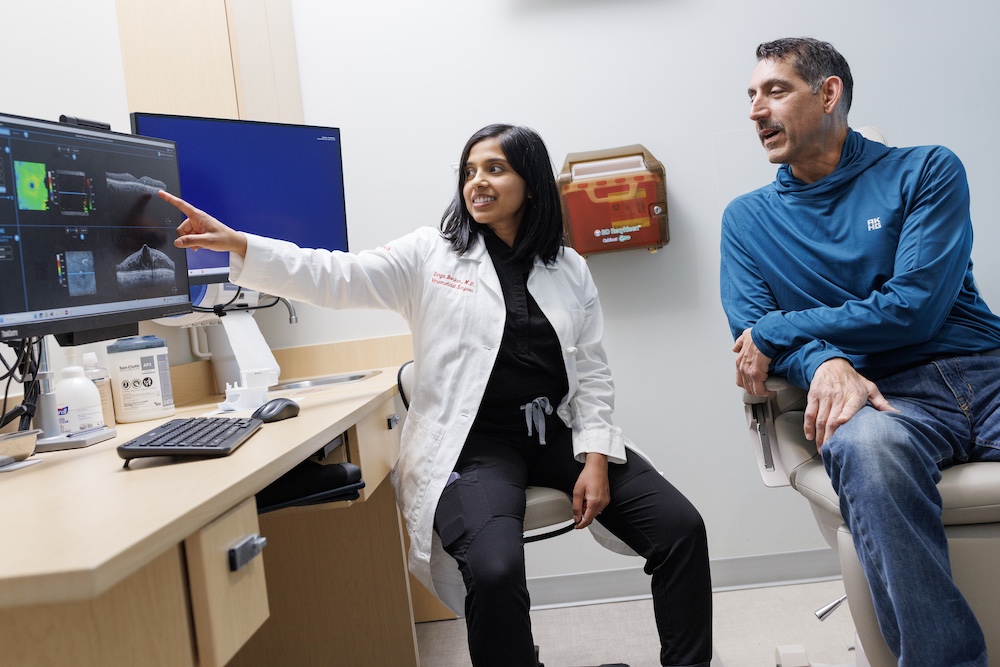
John Yuschak’s experience illustrates the promise of this technology. Living with diabetic macular edema (DME), a vision complication of type 2 diabetes, he endured blurry vision and multiple failed treatments for six years before coming to Duke. His physician, Durga Borkar, MD, MMCi, associate professor of ophthalmology and director of clinical data science, eventually found a steroid treatment that restored much of his sight. But the journey was long.
“If we had known John’s inflammatory molecular profile early on, he could have been started on the right treatment immediately,” Borkar explained. “Instead of years of suboptimal response before coming to Duke, he could have had effective treatment from day one. That’s the promise of precision medicine.”
By analyzing cytokines and other inflammatory markers in tiny eye-fluid samples and combining them with advanced imaging, the AI ecosystem could guide treatment decisions from the start — avoiding years of trial and error. For patients like John, that means faster relief and preserved vision.
John, an IT professional, sees the potential clearly. “I know AI hype can be overblown,” he said, “but the benefits it can bring to medicine are immense.”