
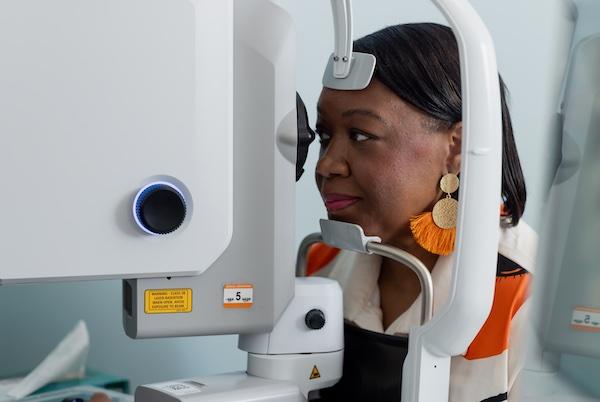
Duke Eye Center will launch its first organized, institution-wide implementation of AI-powered diabetic retinopathy (DR) screening in May 2026, marking a major milestone in the integration of artificial intelligence into routine clinical care. Supported by The Robert M. Sinskey, M.D. Foundation, the initiative brings advanced retinal screening directly into endocrinology clinics, where many patients with diabetes already receive care.

Led by Majda Hadziahmetovic, MD, associate professor of ophthalmology and electrical and computer engineering, the program reflects a close collaboration between Duke Ophthalmology and Endocrinology. Key leadership includes David D’Alessio, MD, PhD, Lindquist Presidential Distinguished Chair, professor of medicine, and chief of endocrinology and metabolism, and Jyothi Rao, MD, associate professor of medicine. “This effort reflects our shared commitment to improving patient outcomes through innovation, early detection, and multidisciplinary care,” said Hadziahmetovic.
DR is a leading cause of preventable blindness among working-age adults in the United States. Although annual retinal screening is recommended, more than half of patients with diabetes do not receive regular eye exams. Many patients managing multiple chronic conditions prioritize visits with endocrinology, nephrology, or primary care, often delaying ophthalmology appointments until visual symptoms develop, by which time the disease may already be advanced.
To address this gap, Duke will implement point-of-care DR screening within endocrinology clinics using FDA-cleared, AI-powered retinal imaging technology. Trained clinic staff will capture retinal photographs without the need for dilation. The AI system analyzes images and generates results in approximately 30 seconds, allowing clinicians to discuss findings with patients during the same visit. When DR is detected, referrals to ophthalmology will be initiated immediately.

“The ability to prevent ophthalmologic complications, including vision loss, is one of the most important and impactful advances in diabetes care. However, to fully realize these benefits, patients must be screened, and that has not been easy for them in the past. This new screening initiative, launched by Departments of Ophthalmology and Endocrinology, will significantly increase our ability to detect diabetic retinopathy by making screening convenient and accessible to our patients, and provide diagnostic information quickly to our providers,” D’Alessio remarked.
The initiative builds on years of evaluation of imaging platforms and the development of a scalable, cost-effective screening model. It is Duke’s first coordinated effort to operationalize AI-driven screening at this scale, embedding advanced diagnostic capabilities into routine specialty care. In addition to improving early detection, the program is designed to increase follow-up adherence, streamline referrals, and optimize use of ophthalmology clinics.
Beyond diabetic eye care, the program establishes a multidisciplinary framework that could serve as a model for broader adoption of AI-enabled screening across clinical specialties. Duke Eye Center and Endocrinology are partnering with Duke’s Pratt School of Engineering, including Miroslav Pajic, PhD, professor of electrical and computer engineering to evaluate AI performance in real-world clinical settings and advance responsible implementation of artificial intelligence in medicine.
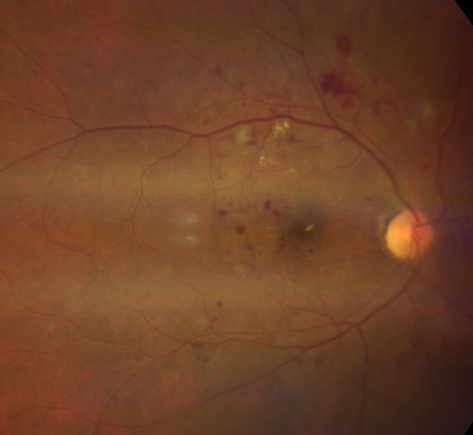
Clinical outcomes, patient adherence, and cost-effectiveness will be closely monitored to assess the program’s impact and guide future expansion. The initial rollout will take place in two high-volume endocrinology clinics, with plans to expand as part of Duke’s proposed Diabetic Center of Excellence.
“The program reflects Duke Health’s growing leadership in collaborative, translational approaches to AI in healthcare—advancing both patient care and the thoughtful integration of emerging technologies,” said Hadziahmetovic.
The initiative is supported by The Robert M. Sinskey, M.D. Foundation, established by the late Dr. Sinskey, a pioneer in ophthalmology, a Duke School of Medicine alumnus, and who completed his ophthalmology residency at Duke. Dr. Sinskey was known for developing widely used surgical techniques and tools, as well as for his commitment to teaching, patient care, and philanthropy. The foundation continues his legacy by supporting innovative research and clinical programs that shape the future of medicine.